

Athlete Guide to UPF Ratings for Sun Protection
Posted by Halo Headband on Nov 22nd 2026
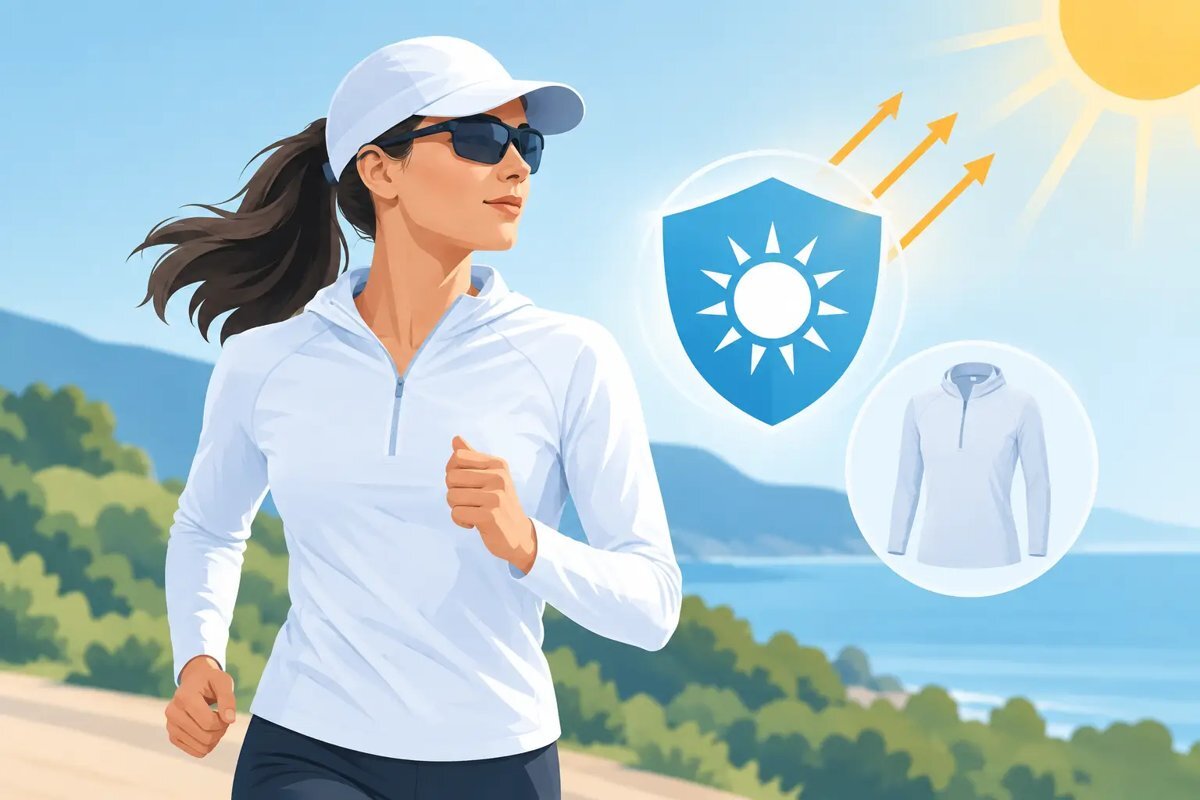
A long summer run can leave two problems competing for your attention: sweat getting into your eyes and sun exposure building on every uncovered mile. This guide breaks down what the label on your shirt, hat, visor, or headwear actually means, so you can choose gear that protects without making your training hotter or less comfortable.
UPF is not a style feature. For athletes who spend hours on the road, court, trail, water, or field, it is a measurable part of a complete sun-protection system.
What a UPF Rating Measures
UPF stands for Ultraviolet Protection Factor. It measures how much ultraviolet radiation passes through a fabric. Unlike sunscreen SPF, which is primarily associated with protection from UVB rays, a properly rated UPF fabric is evaluated for protection from both UVA and UVB radiation.
The number tells you how much radiation reaches your skin through the material. A UPF 30 fabric allows about 1/30 of ultraviolet radiation through, or roughly 3.3%. A UPF 50 fabric allows about 1/50 through, or about 2%. The difference sounds small, but during long, repeated exposure, less transmission is the better performance result.
For training gear, UPF 30 is a solid baseline. UPF 50 or 50+ is the better target when you regularly train at midday, at elevation, near water, or in places where shade is limited. Those conditions can increase the amount of UV exposure your skin receives, even when the temperature feels manageable.
UPF Ratings Are Different From SPF
SPF belongs on sunscreen. UPF belongs on fabric. They work together, but they do not replace each other.
Sunscreen protects the skin you leave exposed: face, ears, neck, hands, lower legs, and any area not covered by clothing. UPF apparel protects the skin beneath the fabric and does not need to be reapplied every two hours. That makes it especially useful for endurance sessions, tournaments, long rides, and outdoor work where reapplying sunscreen can be inconvenient.
A common mistake is treating a hat or headband as a replacement for sunscreen. It depends on the design and the coverage. A narrow band can cover the forehead and help manage sweat, but it does not cover the scalp, ears, face, or neck. A UPF-rated cap, visor, wide band, or bandana can add meaningful protection to covered areas, while sunscreen still handles the rest.
Why Athletes Need More Than a Number
A high UPF rating matters, but the label is only one part of real-world protection. Athletic movement changes how fabric performs. You stretch sleeves while reaching for handlebars, soak a shirt with sweat, wash gear repeatedly, and expose it to friction from packs, straps, and helmets.
The best option is gear designed for the way you actually train. A lightweight layer that stays on, breathes well, and does not slide around can protect you better than a heavier garment you keep adjusting or remove halfway through the workout.
This is where coverage and sweat control meet. When sweat runs into your eyes, athletes often push headwear up, pull sleeves back, or wipe their face with a shirt. Those small adjustments can expose more skin and break concentration. Headwear that stays in place while redirecting sweat helps you keep your protection where it belongs.
Coverage is part of sun protection
A UPF 50 shirt protects only the skin it covers. A long-sleeve quarter zip offers more protection than a short-sleeve tee. A hat with a brim shields more of the face than a low-profile cap, while a neck gaiter or neck flap can add coverage for cycling, fishing, hiking, and other high-exposure activities.
For runners, tennis players, and pickleball players, the most exposed zones are often the face, ears, back of the neck, shoulders, forearms, and calves. Cyclists may also need to think about the back of the neck and tops of the thighs. The right setup depends on your sport, position, route, and how long you will be outside.
Fit affects performance
A garment that fits too tightly can stretch enough to open its knit structure and reduce protection. A garment that fits too loosely may shift during movement, trap heat, or create friction. This does not mean athletic gear should feel baggy. It means compression, stretch, and coverage should be matched to the use case.
For headwear, look for a secure fit that does not require constant readjustment. Halo Headband designs sweat-management headwear with SweatSeal with Grip Technology to help redirect sweat away from the eyes while keeping the fit secure during movement. That function matters when bright sun, hard effort, and sweat all show up at once.
How Fabric Construction Changes UPF Performance
UPF is built into a fabric through several factors, including fiber type, weave or knit density, color, thickness, and UV-absorbing treatments. You cannot reliably judge sun protection by looking at a garment or holding it up to a window. A dark, dense fabric may block more light than a thin white shirt, but the label is what confirms tested protection.
Tightly constructed synthetic performance fabrics often provide strong UV protection while remaining light enough for training. Polyester and nylon can be effective choices because their fibers can be engineered for moisture management, durability, and dense construction. Natural fibers can also provide coverage, but protection varies widely based on the fabric weight, weave, color, and condition.
Do not assume that every technical-looking shirt has a UPF rating. If sun protection is a priority, choose products that state the rating clearly rather than relying on fabric feel or marketing language alone.
Sweat, Water, Stretch, and Wear: What Can Change Protection
Athletes need to think about UPF in motion, not just on a product tag. Wetness can affect some fabrics differently than others. Stretching can increase the space between fibers. Heavy use and repeated washing can change a garment's fit, texture, and protective treatment over time.
That does not mean you should avoid lightweight gear or stop training in the heat. It means you should use purpose-built apparel, follow care instructions, and replace pieces that have become thin, permanently stretched out, or damaged. A sun shirt that has turned sheer across the shoulders or a hat with a worn-out crown is no longer performing as intended.
Salt water, chlorine, abrasive trail dust, and frequent laundering can also shorten the useful life of outdoor gear. Rinse sweat-heavy items after use when possible, avoid unnecessary high heat, and inspect high-wear areas such as shoulders, seams, brims, and the tops of sleeves.
Choosing the Right UPF Level for Your Sport
UPF 30 can work well for shorter sessions, lower-intensity exposure, or training early and late in the day. UPF 50+ is the stronger choice for athletes who routinely train in direct sun, especially when workouts last longer than an hour.
Your environment matters. UV exposure can be high on cool, cloudy days, so temperature is not a reliable guide. Water, sand, concrete, and snow can reflect UV radiation. Higher elevation also increases exposure. If you run mountain trails, cycle open roads, play tournament weekends, or spend hours on a boat, build your kit around higher coverage rather than reacting after a burn.
Breathability remains a valid concern. More coverage does not have to mean more overheating. Look for lightweight materials, ventilation where it does not compromise key coverage, and moisture-wicking construction. The goal is not to layer up blindly. The goal is to reduce UV exposure while keeping body temperature, sweat, and movement under control.
Build a Sun-Ready Training System
Think of UPF gear as one layer of a practical system. Start with a UPF-rated shirt or outer layer that covers the areas most exposed in your sport. Add headwear based on whether you need forehead coverage, a brim for glare, scalp coverage, or sweat control. Then apply broad-spectrum sunscreen to every area that remains uncovered, including ears, hairline, neck, and the tops of hands.
Bring extra sunscreen for long sessions, but do not rely on a mid-workout reapplication to fix a poor clothing choice. Fabric coverage is consistent as long as the garment stays on and remains in good condition. That reliability is useful when you are focused on pacing, technique, or competition.
Read the Label Before You Train
When comparing outdoor training apparel, look for the stated UPF rating first. Then check the coverage, fit, and fabric construction that determine whether you will actually wear it through the full session. A higher number is valuable, but only if the garment supports your sport instead of becoming another distraction.
Choose sun-protection gear the same way you choose any performance equipment: it should stay put, manage heat and sweat, and keep you focused on the next mile, point, rep, or ride.