
Best Sports Visor for Sun and Sweat Control
Posted by Halo Headband on Nov 22nd 2026
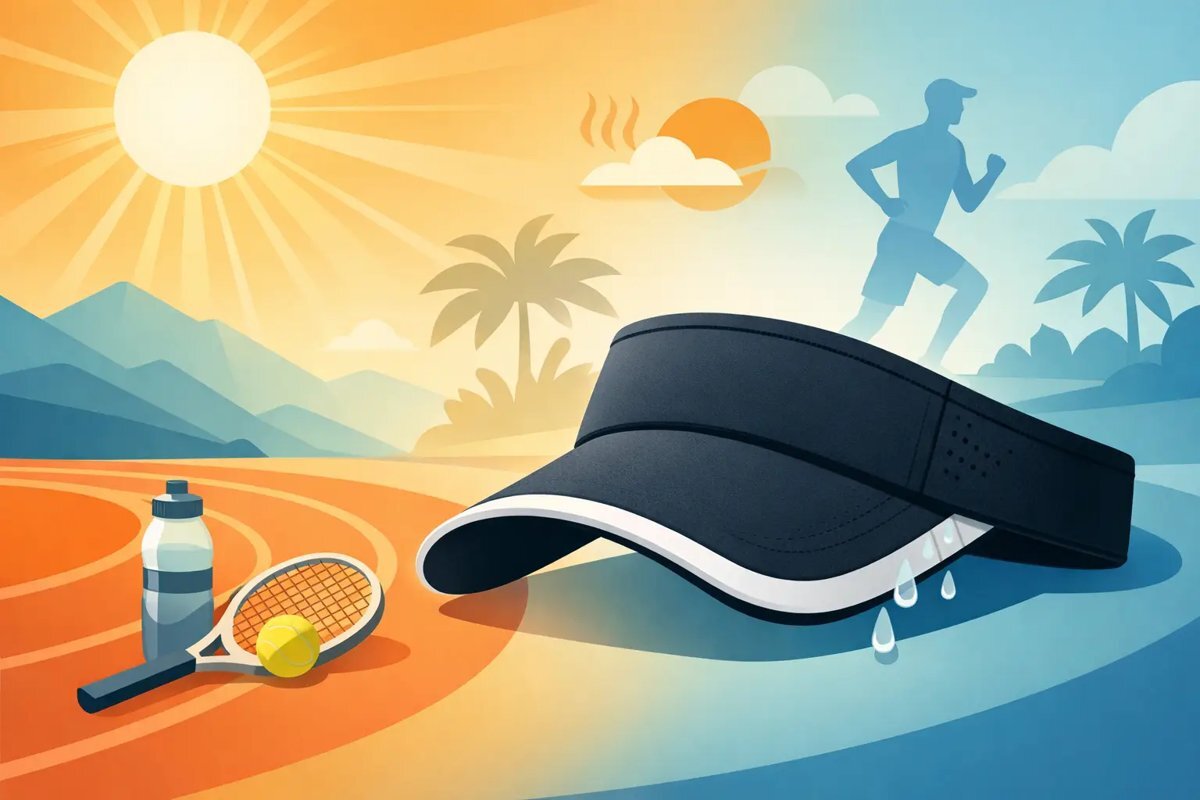
A visor should not force you to choose between shade and clear vision. A good sports visor protects your eyes from direct glare while managing the sweat that can blur your vision halfway through a hard run, a long ride, or a third-set tiebreaker. For athletes who train in heat, the brim is only one part of the job. A dependable visor also has to stay put, breathe well, and keep sweat from reaching your face or glasses.
What a Sports Visor Needs for Sun and Sweat
A sports visor is built for a different purpose than a casual beach visor. It needs to handle repeated movement, changing pace, and enough sweat to overwhelm ordinary cotton bands. The right model combines a structured brim with technical, quick-drying materials and a fit system that does not loosen as you heat up.
Start with the brim. You need enough coverage to shade your forehead and eyes, especially when the sun is low, without a brim so oversized that it catches wind or blocks your upward view. Runners need to see the trail ahead. Tennis and pickleball players need a clean view of a lob. Cyclists need coverage that works when their head is angled forward. A curved, stable brim generally delivers the most useful balance.
Just as important, a visor must solve the sweat problem behind the brim. Sweat gathering at the brow eventually follows the easiest path: down into your eyes. That stings, disrupts focus, and can turn a good training session into a frustrating one. Look for sweat-control construction that captures moisture at the forehead and directs it away from your eyes rather than simply absorbing it until the fabric becomes saturated.
Match the Visor to Your Sport and Sun Angle
The best sports visor for sun depends partly on how you move and when you train. A golfer or walker spending hours under a high midday sun may prioritize broader facial shade and a comfortable fit that lasts all day. A runner working through an early morning session may need a brim that controls low-angle glare without feeling heavy or restrictive.
For court sports, quick head turns matter. A loose visor can shift when you serve, return, or sprint laterally. Choose a low-profile design with a secure band and enough grip to resist movement. If you wear sunglasses, test the visor with your frames. The band should sit comfortably above the arms of your glasses instead of pressing them into your temples.
Cyclists have another consideration: wind. A brim that feels fine while standing still can lift or flap at speed. A close-fitting visor with a stable, moderately sized brim is usually the better choice. For trail runners, a darker underside can help reduce reflected glare from pale rock, sand, or pavement, though the effect varies with the conditions and your eyewear.
Sweat Control Is the Performance Feature
Shade is easy to understand. Sweat management is where a true performance visor separates itself from a basic accessory.
Traditional terry cloth can absorb sweat, but it may hold moisture, become heavy, and lose its ability to keep perspiration out of your eyes during longer efforts. Technical sweat-control systems are designed to move moisture where it causes less trouble. A channel or seal at the forehead can redirect sweat toward the sides of the face, helping keep your vision clear when the temperature and intensity rise.
This matters most for high-sweat athletes, but it is not limited to them. Even moderate sweat becomes a distraction when it reaches contact lenses, sunscreen, or glasses. If you have ever had to wipe your eyes in the middle of an interval, you already know the value of headwear that handles moisture before it becomes a problem.
Halo Headband visors use patented SweatSeal with Grip Technology to redirect sweat away from the eyes and face while helping the visor stay in position. That combination addresses the two failures athletes notice first: dripping and slipping.
Look for a Fit That Stays Put
An adjustable closure lets you fine-tune fit, but adjustment alone does not guarantee stability. The band material, interior grip, and overall visor shape all affect whether it remains secure through movement. A visor that is too tight can create pressure points and headaches. One that is too loose will migrate upward, bounce, or turn with every change of direction.
The goal is a No-Slip Comfort Fit: secure at the forehead, comfortable around the head, and stable enough that you forget it is there. Try fitting the visor as you would wear it during activity, not loosely like a casual hat. It should make full contact with the forehead without pinching.
Hair also changes the equation. Athletes with ponytails may prefer an opening or adjustable back that accommodates hair placement without forcing the band too high. If you wear your hair down or have a close-cropped cut, prioritize a soft inner surface and a closure that does not create a pressure spot at the back of the head.
Breathability Matters More in Heat
A visor leaves the top of your head open, which can make it feel cooler than a full cap during hot-weather training. But the band still needs to release heat and dry quickly. Heavy, slow-drying fabric can trap warmth against the forehead and feel uncomfortable long before the workout is done.
Choose lightweight, breathable materials that manage moisture without becoming stiff when wet. The best construction feels supportive when dry and remains comfortable once sweat builds. This is especially useful for humid climates, where evaporation slows and ordinary fabrics can stay soaked.
Color can affect comfort in direct sun, but it should not be the only deciding factor. Lighter colors may feel cooler under intense sunlight, while darker colors can be practical for hiding dirt, sunscreen marks, and repeated-use wear. Fit, sweat control, and brim performance should come first.
Do Not Mistake a Visor for Full Sun Protection
A visor shades the face and eyes, but it does not cover the crown, ears, neck, or sides of the face. That open-top design is a benefit for airflow, yet it creates a clear trade-off for long exposure. Use sunscreen on exposed skin and pair the visor with UV-rated sunglasses when conditions call for them.
If you are running a midday race, hiking for hours, or working outdoors with little shade, a full-brim hat or cap may offer more complete coverage. If you are playing tennis, pickleball, golf, or training in conditions where airflow and unobstructed vision matter most, a performance visor can be the better tool.
There is no single answer for every athlete. The right choice comes down to your sweat rate, sport, sun exposure, hairstyle, and whether you need eyewear compatibility. What should not be negotiable is stability. Sun protection is only useful when the visor stays correctly positioned from warm-up through cooldown.
Make Your Visor Last Through Training Season
Rinse your visor after especially sweaty sessions instead of leaving salt and sunscreen to dry into the band. Follow the care instructions for the specific material, and avoid storing it crushed under heavy gear. A bent brim can change the visor's coverage and fit, while built-up residue can reduce comfort against the forehead.
Before race day or a long outdoor session, wear the visor during a few regular workouts. That gives you time to confirm the adjustment, glasses fit, and sweat-control performance under real effort. The best visor is the one that keeps glare and sweat out of your way, so your attention stays on the next mile, point, or rep.