
Cotton vs Technical Headbands for Training
Posted by Halo Headband on Nov 22nd 2026
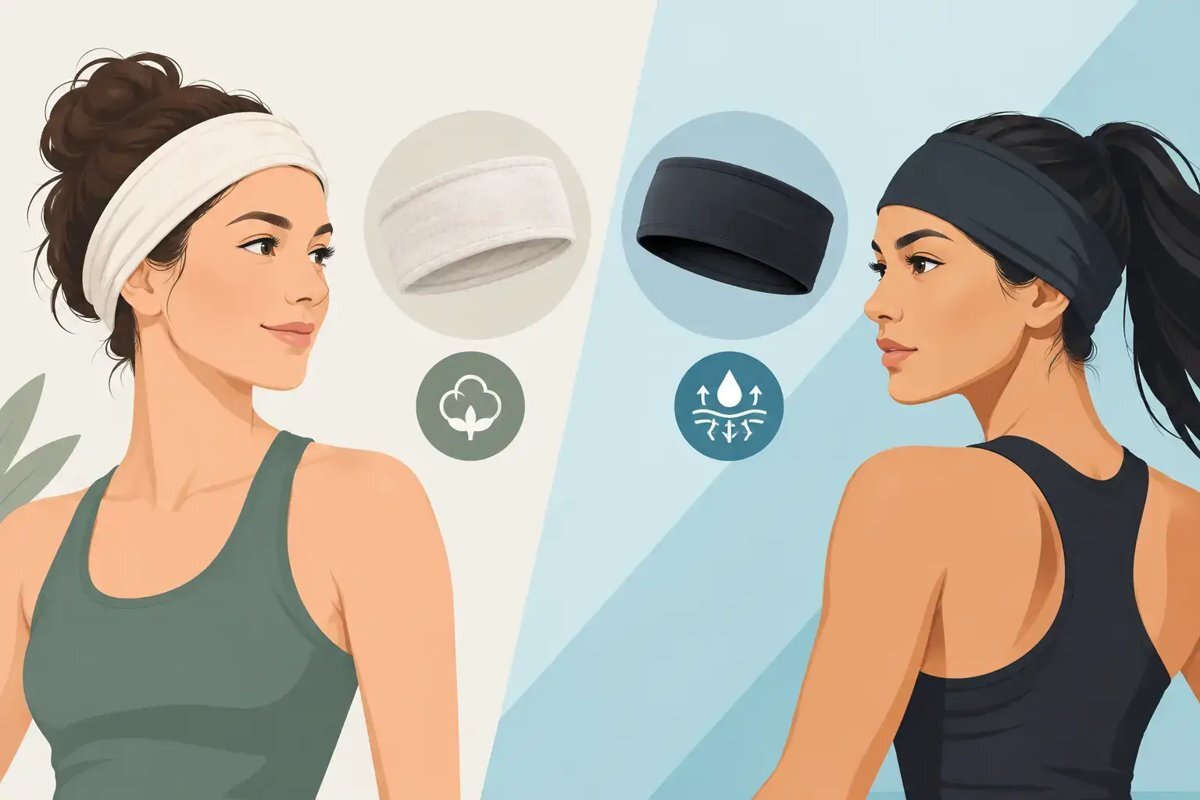
A headband can feel fine during warm-up and become a distraction the moment sweat starts running toward your eyes. The real difference is not how the band feels when dry, but how it manages moisture, movement, heat, and repeated use when your training gets serious.
For low-sweat activity, either material may get the job done. For runners, cyclists, tennis players, pickleball players, gym athletes, and anyone who trains hard in heat, the better choice usually comes down to where sweat goes after the headband absorbs it.
Cotton vs Technical Headbands Under Real Sweat
Cotton is familiar, soft, and comfortable against the skin. It absorbs moisture quickly, which can make it feel useful during the first part of a workout. A cotton headband may be a reasonable option for light walks, casual stretching, or short sessions where sweat is not a major issue.
The drawback appears as the fabric becomes saturated. Cotton holds onto water rather than moving it away or drying quickly. Once wet, it can feel heavy, stay damp against your forehead, and gradually lose its ability to manage additional sweat. If sweat continues to build, it can travel past the band and into your eyes, onto your glasses, or down your face.
Technical headbands are designed around that problem. Performance fabrics are generally selected to move moisture, dry faster, and maintain a lighter feel under sustained effort. The best technical designs also address the path of sweat, not just absorption. That distinction matters when you are trying to hold pace, track a ball, read a bike computer, or finish a hard interval without wiping your face every few minutes.
Cotton Feels Soft, but Saturation Changes the Fit
A dry cotton band has a comfortable, natural feel. Many athletes like it for everyday wear because it is simple and nontechnical. But a comfortable fabric is not automatically a high-performance fabric.
Cotton fibers absorb sweat into the material. During a high-sweat workout, that moisture adds weight and changes the band’s feel against the skin. The fabric may stretch, bunch, or become loose as it gets wet. If the band slides toward your eyebrows or ears, you end up adjusting it instead of concentrating on your effort.
This does not mean cotton is always the wrong answer. It can be a practical choice for low-intensity activity, cool conditions, or athletes who want a soft band for casual use. It is less dependable when sweat control is a performance requirement.
Technical Fabrics Are Built for Active Use
Technical headbands typically use synthetic or blended materials engineered for athletic movement. Rather than soaking up and retaining as much moisture as cotton, these fabrics are often made to spread moisture across the surface and encourage faster evaporation.
That helps in two ways. First, the band is less likely to become waterlogged during long runs, rides, matches, or training sessions. Second, it can stay more consistent against your head as conditions change. A band that remains lighter and dries faster is easier to wear for the full duration of a workout.
Still, not every technical headband performs the same way. A thin moisture-wicking fabric can be breathable but may not stop sweat from reaching your eyes. A wide band can provide more coverage but may feel too warm for some athletes. Material matters, but construction, width, fit, and sweat-routing design matter just as much.
Sweat Redirection Is More Useful Than Absorption Alone
Absorption is only part of sweat management. When sweat pours down from the hairline, even a highly absorbent band has a limit. The question becomes whether the headband gives perspiration a route away from the center of your face.
This is where purpose-built sweat-control headwear has an advantage. Halo Headband uses patented SweatSeal with Grip Technology to direct sweat away from the eyes, face, and glasses while helping the band stay in place. For athletes who regularly deal with stinging eyes, fogged lenses, or sweat dripping during competition, that function is more relevant than softness alone.
A sweat-routing design is especially useful for cycling, running, racquet sports, and gym training. In each case, stopping to wipe your face breaks concentration. You should not need to choose between seeing clearly and keeping your workout moving.
Grip Makes a Difference When You Move
Sweat can make nearly any headband slip. Repeated strides, quick direction changes, helmets, hats, ponytails, and hair texture all add to the challenge. A band that shifts during a workout may still be comfortable, but it is not doing its job consistently.
Cotton headbands often rely on elastic tension and fabric friction to stay put. When cotton becomes wet, that grip can change. A technical headband with a no-slip feature is designed to maintain a more secure fit as you sweat and move.
Fit is personal, so there is no single style that works for everyone. Narrow bands are often preferred by athletes who want minimal coverage. Wide pullover bands can provide more sweat protection and hair control. Tie-back and adjustable options allow athletes to fine-tune tension, which can be helpful for long hair, larger head sizes, or helmet use.
Breathability Depends on More Than Fabric Type
Technical does not automatically mean cooler, and cotton does not automatically mean hotter. A lightweight cotton band may feel airy in dry conditions, while a thick technical band may feel warm. The right choice depends on your sport, weather, sweat rate, and how much coverage you need.
For hot-weather running or high-output indoor training, look for a headband that balances airflow with sweat control. A thin, fast-drying technical band can work well when heat is the main concern. If sweat is heavy enough to run down your face, a band with a dedicated sweat channel may be the better priority.
For cold-weather activity, a wider technical headband can add warmth while keeping perspiration from collecting around the forehead. The goal is not simply to cover your head. It is to stay comfortable as your body temperature rises and falls.
Durability Favors Performance Materials
Frequent training exposes headwear to salt, sunscreen, repeated stretching, washing, and drying. Cotton can wear down over time, especially when it is regularly soaked with sweat. It may lose shape, fade, or feel stiff after repeated wash cycles.
Quality technical fabrics are usually better suited for this routine. They are designed to recover after stretching, dry between workouts, and keep their performance feel through regular use. That makes them a practical choice for athletes who train several days a week and do not want to replace basic gear constantly.
Care still matters. Rinse or wash your headband after sweaty sessions, follow the care instructions, and allow it to dry fully. A clean band feels better, lasts longer, and performs more consistently.
Choose Based on Your Sweat Level and Sport
If you want a soft, familiar band for occasional light activity, cotton can be enough. It is straightforward, accessible, and comfortable when sweat is limited.
Choose a technical headband when you need faster drying, a more stable fit, and better comfort during high-output exercise. Choose a sweat-management design when your biggest issue is perspiration reaching your eyes, face, or glasses. For athletes who sweat heavily, that is usually the deciding factor.
Before your next hard session, think about the moment your current headband stops helping. If that moment arrives when sweat starts running into your eyes, it is time for headwear built to keep your focus where it belongs: on the next mile, point, rep, or finish line.