
How to Keep Sweat Off Your Glasses While Training
Posted by Halo Headband on Nov 22nd 2026
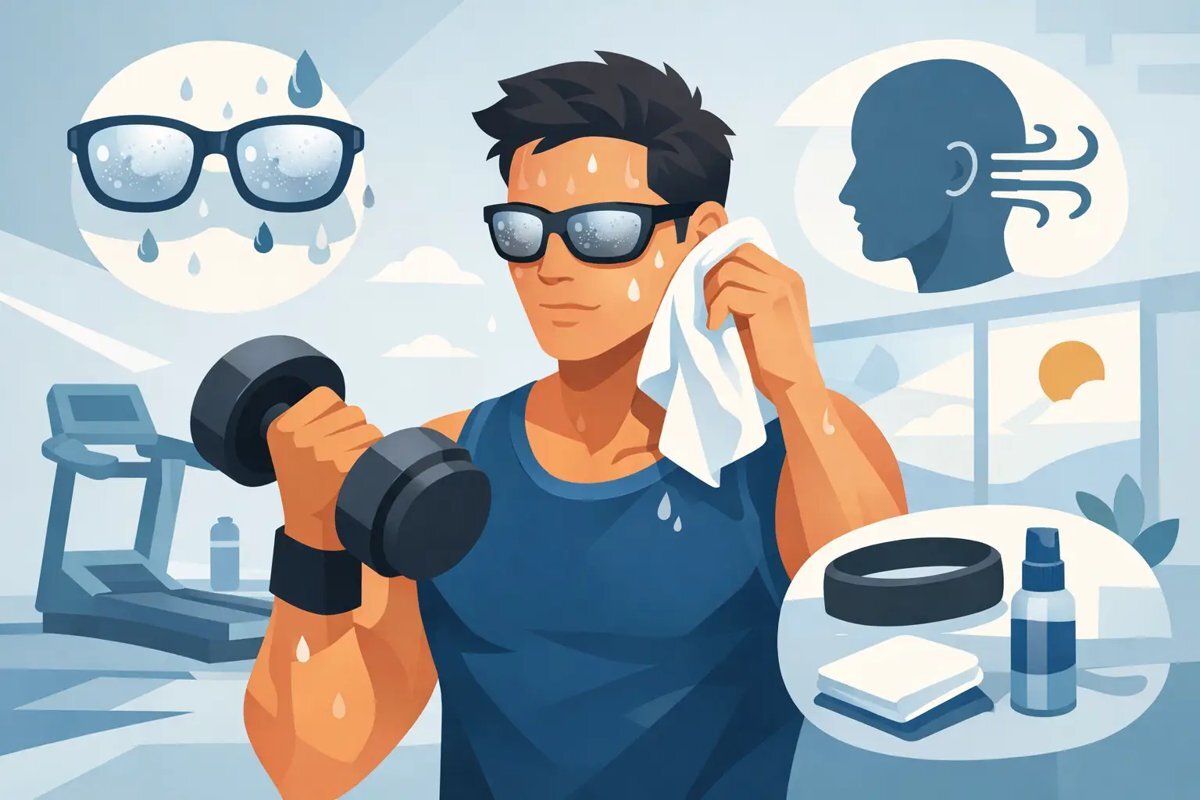
Nothing breaks focus faster than sweat sliding down your forehead, hitting your lenses, and turning clear vision into a smeared mess. During runs, rides, lifts, or court sports, the fix usually is not your glasses alone. It is the whole sweat path from your scalp to your frames.
That matters because glasses problems during training tend to stack up. Sweat lands on the lenses, salt dries on the frame, the nose pads get slick, and then your glasses start sliding every time your pace picks up. You wipe them with your shirt, vision gets worse, and now you are thinking about your face instead of your workout.
The good news is that this is a solvable gear problem. The best results come from controlling sweat before it reaches your glasses, improving frame stability, and matching your setup to how you actually train.
Why sweat ends up on glasses in the first place
Most athletes assume the lenses are the issue, but sweat usually starts higher. As your body heats up, sweat builds along the scalp and hairline. From there it travels downward with gravity and movement. If nothing intercepts it, it reaches your eyebrows, your face, and eventually your glasses.
Once that happens, two problems show up. First, the lenses get wet or streaked. Second, the contact points on the frame get slippery. Even a well-fitted pair of glasses can start moving if sweat coats the nose bridge and temples.
There is also a sport-specific factor. Runners deal with repetitive impact, cyclists deal with heat and airflow changes under helmets, and court athletes deal with sharp cuts and head movement. The faster you move and the more you sweat, the less margin you have for gear that only sort of works.
Stop sweat at the source
If you want a reliable answer to how to keep sweat off glasses, start at the forehead. Stopping sweat at the lens is late. Redirecting it before it reaches your face is what works.
A performance headband is usually the most effective fix because it addresses the source instead of the symptom. The right one sits securely against the forehead, absorbs sweat, and channels it away from the eyes and frames. That is different from a generic cotton band that gets saturated, shifts during movement, and eventually dumps moisture right where you do not want it.
This is where construction matters. A technical sweat-management headband should do three things at once: stay in place, manage moisture under effort, and avoid trapping excess heat. If it slides, bunches, or feels swampy after ten minutes, it is not solving the problem. Halo Headband uses a patented SweatSeal with Grip Technology designed specifically to redirect sweat away from the eyes, face, and glasses while maintaining a secure fit during movement.
For high-sweat athletes, that redirection piece is the difference. Absorbing some sweat is helpful. Guiding it away from your lenses is better.
Choose the right headwear for your training
Not every session calls for the same setup. A narrow headband can be enough for steady runs, gym training, or pickleball if your sweat starts mainly at the hairline. A wider pullover band may make more sense if you sweat heavily across the full forehead or train in high heat. Under a helmet, lower-profile options often work better because they add less bulk while still controlling moisture.
The trade-off is simple. More coverage usually means more sweat capacity, but it can also feel warmer depending on the fabric and conditions. Less coverage feels lighter, but if you are a heavy sweater, it may not keep up late in the session. The right choice depends on your sweat rate, the weather, and how long you are training.
Get your glasses fit right
Even the best sweat-control gear cannot fully compensate for glasses that already fit poorly. If your frames slide when you are dry, they will slide faster when sweat shows up.
Start with the nose bridge. Glasses should sit securely without pinching. If the nose pads are too loose, sweat turns a small fit issue into constant movement. Temple arms matter too. They should hold gently behind the ears without creating pressure points that become distracting during longer efforts.
If you wear prescription glasses for sports, consider having them adjusted specifically for training instead of everyday office use. A fit that feels fine at a desk may not be stable enough for sprints, hill climbs, or fast lateral movement. Sports eyewear often benefits from a more locked-in fit because the demands are different.
Look at frame material and grip
Some frame materials handle sweat better than others. Rubberized nose pads and temple grips tend to perform better than smooth plastic when your skin gets wet. Lightweight frames can also help because they place less downward force on the nose bridge once sweat reduces friction.
There is a balance here. Very tight frames can feel secure at first but become uncomfortable over time, especially on long runs or rides. The goal is stable, not restrictive.
Reduce lens smearing and fogging
Sweat on glasses is not always just droplets. Often it is a mix of moisture, skin oil, sunscreen, and salt. That is why lenses can look cloudy even after a quick wipe.
Use a clean microfiber cloth before and after training, not the hem of your shirt. Shirt fabric can smear residue across the lens and leave tiny scratches over time. During workouts, if you need a fast wipe, use something clean and soft. The less residue you spread around, the better your visibility stays.
Fogging is a related issue, especially when sweat combines with heat and limited airflow. If your glasses sit very close to your face, warm moisture can build up behind the lenses. Better ventilation, a more sport-oriented frame shape, and headwear that reduces sweat runoff can all help. Anti-fog lens treatments can help too, but they work best as part of a system, not as the only fix.
Be careful with sunscreen and hair products
A lot of athletes blame sweat alone when the real problem is what the sweat is carrying. Heavy sunscreen around the forehead and eyebrows can mix with perspiration and create a film on your lenses. Hair products can do the same thing, especially when they soften with heat.
That does not mean skipping sun protection. It means applying it strategically. Give sunscreen time to set before training, and avoid piling excess product right at the hairline if your glasses always get coated. If you use hair product, keep it light on training days or choose formulas less likely to run when you heat up.
Match the fix to your sport
The best answer to how to keep sweat off glasses can look slightly different depending on what you do.
For running, repetitive impact tends to move both sweat and frames, so a no-slip headband plus a secure frame fit usually makes the biggest difference. For cycling, helmet compatibility matters. Low-profile sweat-control headwear that works under the helmet is often the cleanest solution. For tennis and pickleball, where quick cuts and head turns are constant, stability matters just as much as sweat absorption. If you are lifting or training indoors, heat buildup may be less about sun and more about sustained exertion, so breathability becomes more important.
The point is not to overcomplicate it. It is to stop using the same setup for every condition if it clearly is not working.
Small habits that make a big difference
A few routine changes can improve performance without changing your whole kit. Start workouts with clean lenses and clean skin around the nose bridge so oils do not reduce grip before you even begin. Wash headwear regularly so dried salt does not affect comfort or moisture management. If you train long, bring a backup cloth or second headband instead of waiting until everything is saturated.
Also pay attention to timing. If your glasses only become a problem 30 minutes into a session, that tells you your current setup handles light sweat but not sustained output. That is useful information. It usually means you need more effective forehead sweat control, not more wiping.
What usually works best
For most active adults, the most dependable solution is a technical headband paired with properly fitted glasses that have good grip at the nose and temples. That combination handles the cause and the consequence. Sweat gets redirected before it reaches the lenses, and the frames stay more stable if some moisture still gets through.
You can add lens treatments, adjust sunscreen habits, or switch frame materials, and those things may help. But if sweat is pouring straight from your forehead onto your glasses, the biggest improvement usually comes from controlling that flow first.
Training is hard enough without fighting your own gear. When your vision stays clear and your glasses stay put, you stop managing distractions and get back to the work in front of you.