
Team Headwear Customization Guide
Posted by Halo Headband on Nov 22nd 2026
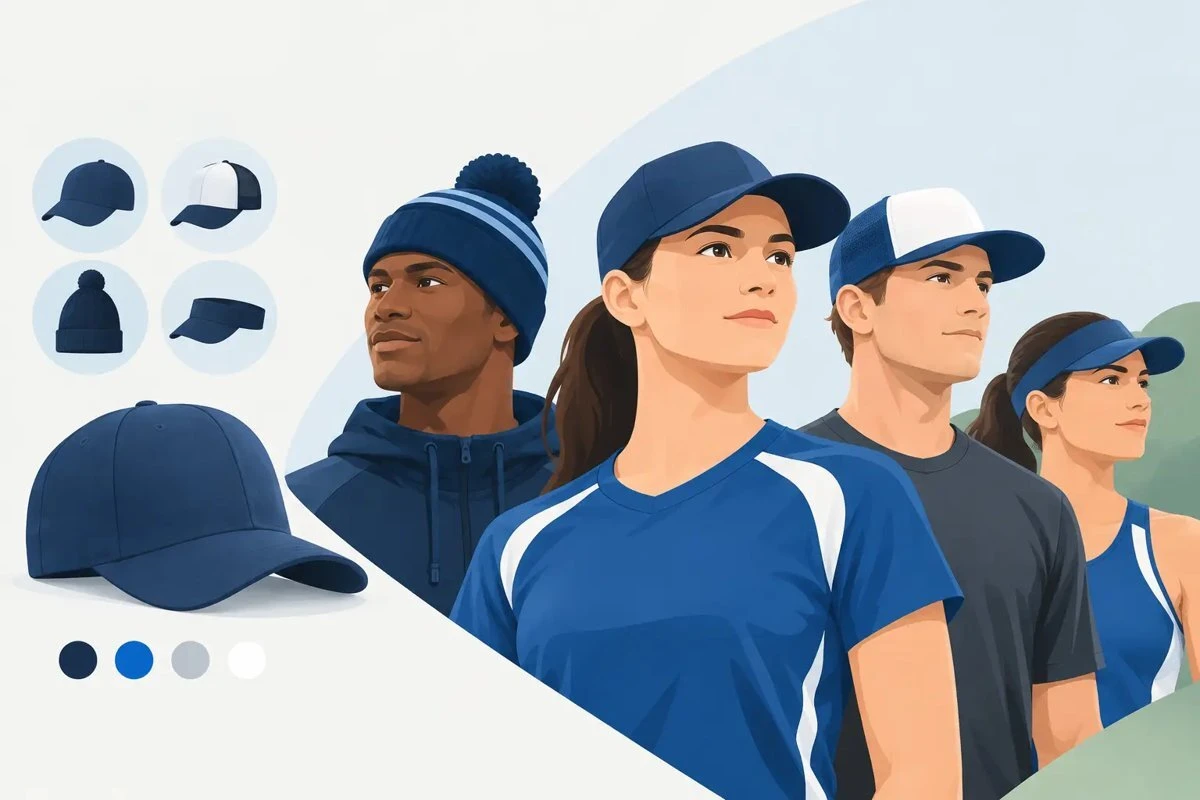
A team logo does not help much if players pull their headwear off by the second quarter. The right custom order starts with performance: control sweat, stay secure through movement, and give every athlete a comfortable fit they will actually wear. Custom colors and graphics matter, but they should support the product's job, not distract from it.
For training groups, school programs, clubs, and competitive teams, customized headwear can create a unified look while solving a daily problem. Sweat in the eyes, glasses fogging up, and slipping fabric break concentration. A well-chosen custom headband, visor, skull cap, or bandana helps athletes stay focused on the next play, rep, mile, or point.
Start With the Conditions Your Team Faces
Headwear selection should begin with the sport, the climate, and how much athletes sweat. A lightweight running team training outdoors in July has different needs than a softball program playing under direct sun or a cycling club riding in cool morning weather.
High-sweat activities call for a headwear design that actively manages moisture at the forehead. Absorbent fabric alone can become saturated and allow sweat to travel down the face. A technical sweat seal that redirects moisture away from the eyes is a better fit for athletes who train hard, compete in heat, or wear prescription glasses and sunglasses.
Movement matters just as much. Tennis, pickleball, basketball, and trail running require a secure fit through quick stops, turns, and repeated motion. For these sports, look for a no-slip construction that stays in place without an overly tight feel. Cycling and endurance running may favor lower-profile styles that fit comfortably beneath helmets or caps.
For sun exposure, a visor, hat, or wide band can add practical coverage. For cold-weather teams, skull caps and insulated headwear should provide warmth without trapping excess moisture. The best team program often includes more than one option so athletes can choose equipment that fits their role and conditions.
Choose a Style Athletes Will Use
Custom headwear is most effective when it matches the way your team trains. Do not select a style solely because it offers the largest logo area. A smaller logo on a headband that athletes wear every day will usually deliver more value than a large graphic on a product that stays in a gear bag.
Technical headbands for high-output training
Technical headbands are a strong choice for runners, fitness teams, racquet-sport players, and general training groups. They keep hair and sweat under control without adding much weight or heat. Look for a construction built to move sweat away from the eyes and hold its position during intense activity.
Narrow profiles can work well for athletes who want minimal coverage. Wider pullover bands offer more forehead coverage and can be a better option for long-haired athletes, cooler conditions, or teams that want a more visible color block.
Tie-backs and adjustable fits for mixed rosters
Teams rarely have one head size, hair type, or fit preference. Tie-back headwear and adjustable styles give athletes more control over tension and placement. They are especially useful for large rosters, tournament giveaways, and programs ordering for a broad range of ages.
The trade-off is speed and appearance. Some athletes prefer a clean pullover style with no loose ends, while others value the customized fit of a tie-back. If possible, offer both styles in a coordinated color program rather than forcing one solution on every athlete.
Hats, visors, and skull caps for sport-specific needs
Hats and visors make sense when glare and sun exposure are major concerns. Visors preserve airflow and work well for athletes who wear high ponytails. Hats offer more coverage, though the fit under a helmet or with certain hairstyles should be considered before placing a full team order.
Skull caps are a practical choice under helmets, for cold-weather running, or for athletes who prefer full coverage. If the team trains hard, prioritize breathable materials and moisture control. Warmth is useful, but a wet, overheated skull cap can become a distraction quickly.
Build Your Customization Plan
Once the product style is set, define the visual system. The goal is not to place every sponsor, slogan, and graphic on a small piece of fabric. Headwear has limited real estate, and clean customization usually performs better than crowded artwork.
Start with the team mark. A simple logo, initials, mascot icon, or wordmark is easier to recognize at a distance. Fine lines, tiny type, and intricate shading can lose clarity depending on the decoration method and fabric texture. If your primary logo is detailed, create a simplified headwear version rather than shrinking the full mark until it becomes unreadable.
Next, choose colors that work in motion and in sweat. Darker colors can hide sweat marks and daily wear, while bright accent colors improve team visibility and create a stronger sideline presence. White and very light colors can look sharp, but they may show dirt, sunscreen, and moisture more quickly. There is no universal right answer. It depends on whether your priority is a clean classic look, heat management, visibility, or easy care.
Keep the artwork consistent across styles. A team may use a headband for training, a visor for tournament days, and a skull cap for cold weather. Repeating the same core logo and color treatment makes the collection feel intentional, even when the products serve different functions.
Match the Decoration Method to the Product
Customization quality depends on more than artwork. The decoration method has to work with the product's stretch, fabric, and performance features.
Embroidery provides a traditional, durable look and can be a strong fit for hats and some structured headwear. On lightweight stretch headbands, however, heavy embroidery may affect comfort, flexibility, or moisture performance. Large stitched areas can also add stiffness where athletes need soft contact against the forehead.
Printed decoration is often better for technical performance headwear because it can keep the product light and flexible. It also supports bolder color treatments and more detailed graphics. Before approving art, ask how the print will hold up through repeated washing, sweat exposure, and regular training use.
Placement deserves the same attention. A centered front logo is the standard choice, but side placement can create a cleaner look on narrow bands or leave the primary sweat-management zone unobstructed. Avoid placing decoration over key performance components if it could alter the product's fit, stretch, breathability, or ability to direct sweat.
Get Sizing and Quantity Right Before You Order
A customization project can look perfect on a digital proof and still disappoint if athletes do not have the right fit. Review the sizing approach for every style. One-size stretch headwear simplifies ordering, but it should still offer enough recovery to stay secure across different head sizes. Adjustable products reduce sizing risk, particularly for youth programs or large event orders.
Order quantities should reflect actual use, not just roster size. Athletes who train frequently often benefit from two or more pieces, especially during hot weather or multi-day tournaments. One can be in use while the other is drying or ready for the next session.
Plan around the full group as well. Coaches, support staff, and team managers can reinforce a consistent team look, and they often spend long hours outdoors. If budget is tight, prioritize athletes first, then add staff pieces in a second run.
Before production, confirm these details with the team decision-maker:
- The final logo file and approved colors
- The exact product style or styles
- Decoration size and placement
- Quantity by style, color, and fit option
- Required in-hand date for the season or event
Allow time for approvals and production rather than waiting until uniforms are already arriving. A rushed order can limit product choices and reduce the time available to check artwork, fit, and color accuracy.
Test Performance Before Committing to a Large Run
For a new team program, a sample-first approach is smart. Have a few athletes wear the product during a real practice, not just for a quick mirror check. Test it during sprints, drills, long runs, and high-heat sessions. The questions are simple: Does it stay put? Does it keep sweat out of the eyes? Does it feel comfortable after an hour? Does the logo remain visible and the fabric recover after washing?
This matters most for teams moving from generic cotton bands or promotional headwear to technical products. Function-first headwear can change the experience significantly, but only if the style fits the sport and the athletes using it. Halo Headband's patented SweatSeal with Grip Technology is designed for this exact performance need: redirecting sweat away from the face while helping headwear stay in place.
A strong custom program gives athletes equipment they trust, not just another item with the team logo. Choose the product that earns a place in every practice bag, and your team identity will show up where it counts: through the hard work.